There's an advantage we take for granted here: the lake isn't the day out, it's where the day out starts. From Lake Lavarone the trails head off in every direction — into the woods, into the history, into contemporary art. Here are five of them, in order of distance from the front door.
This is the Alpe Cimbra, a high plateau in Trentino, in the Italian Alps. It takes its name from the Cimbri, German-speaking communities who settled these mountains centuries ago. In Luserna, just up the road, Cimbrian is still spoken — one of the smallest minority languages in Europe.
1. The lake loop
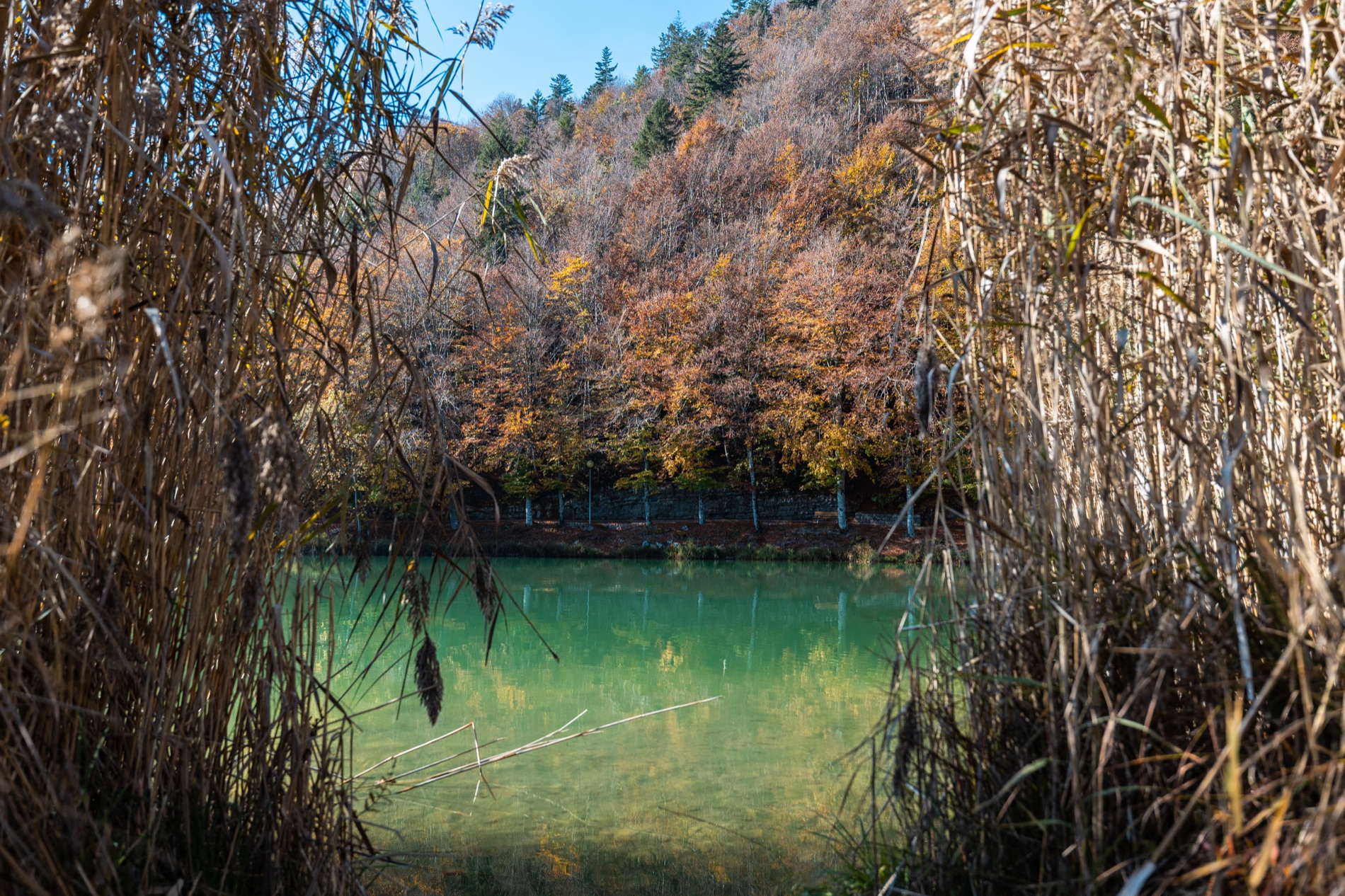
The simplest, and the one to start with. The ring around Lake Lavarone is almost entirely flat: about two kilometres of shoreline, jetties and reflections, done in a comfortable half hour if you don't hurry. It's at its best early, when the water is still and the village hasn't woken up.
Suitable for everyone, pushchairs and bikes included. And for dogs, who are very much at home here.
2. Il Respiro degli Alberi — the Breath of the Trees
If there's one walk that sounds like silence, this is it. It's a contemporary art trail through the woods of Lavarone: along the path you come across sculptures made from natural materials, all built around a single idea — the tree as a symbol of life.
They aren't meant to last. The forest slowly takes them back, and that's part of the project; every summer, new ones appear. You walk in the shade between spruce and beech, stop in front of a sculpture, breathe, carry on. It's about two and a half kilometres, and it deserves to be taken slowly.
3. Forte Belvedere Gschwent
Looking at the lake today, it's hard to picture that a little over a century ago a contested border ran right through here. Yet the Alpe Cimbra holds one of the most striking reminders of the First World War: the Seven Fortresses of the plateaux.
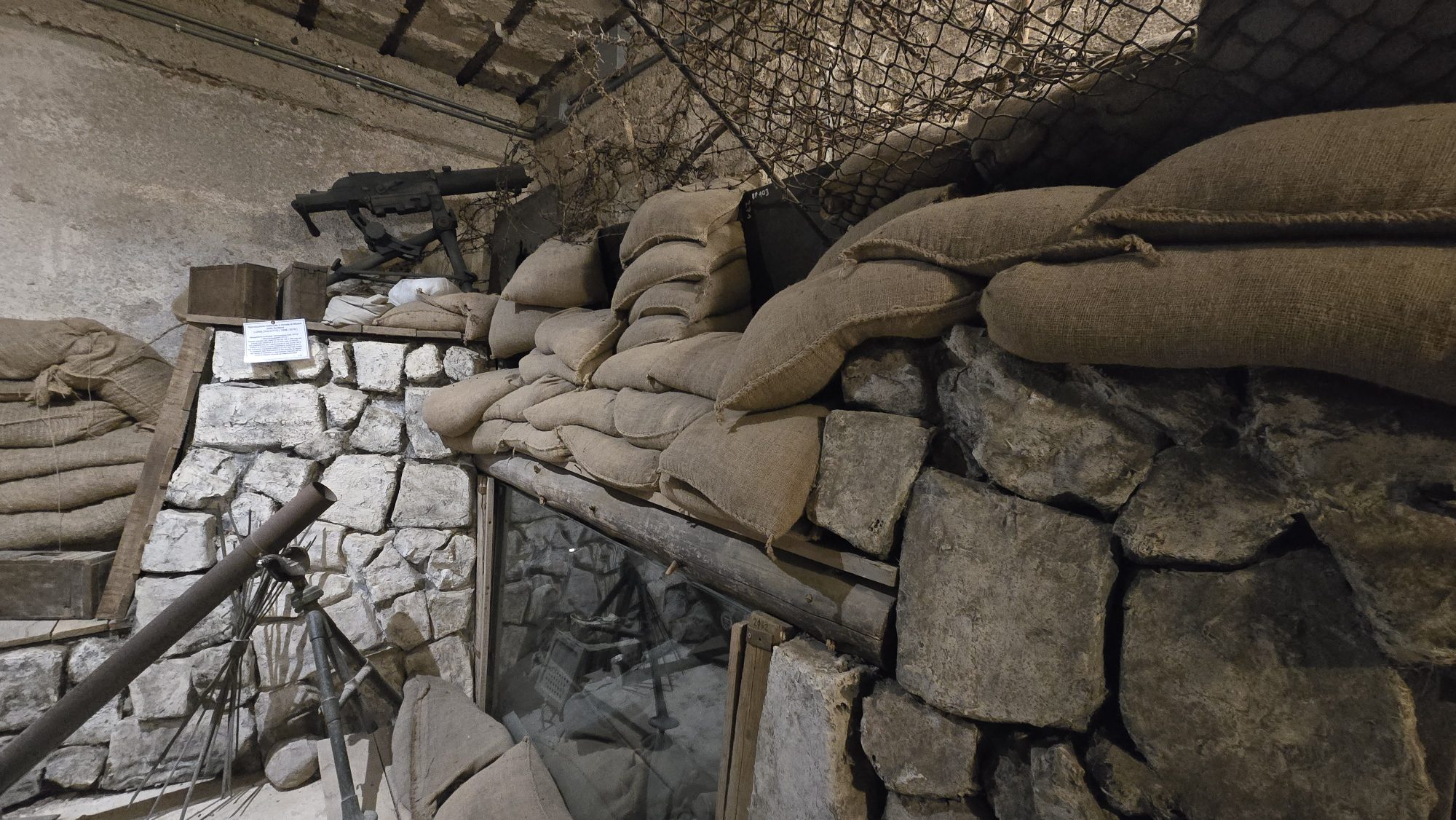
Forte Belvedere Gschwent is the most dramatic and the best preserved — clamped to the rock, hanging directly over the Val d'Astico. It's a museum now, and you visit it on foot, through tunnels and gun emplacements, with views that take your breath away for two entirely different reasons. Getting there is a short walk, fine for anyone.
The fortresses are linked by the Sentiero della Pace, the Peace Trail, which runs the length of the old front. On the plateau you can walk easy stretches of it, through meadows and woods, with trenches and gun positions surfacing at every bend.
4. The Vaia Dragon, which died and came back bigger
This is the best story on the plateau, and it deserves telling in full.
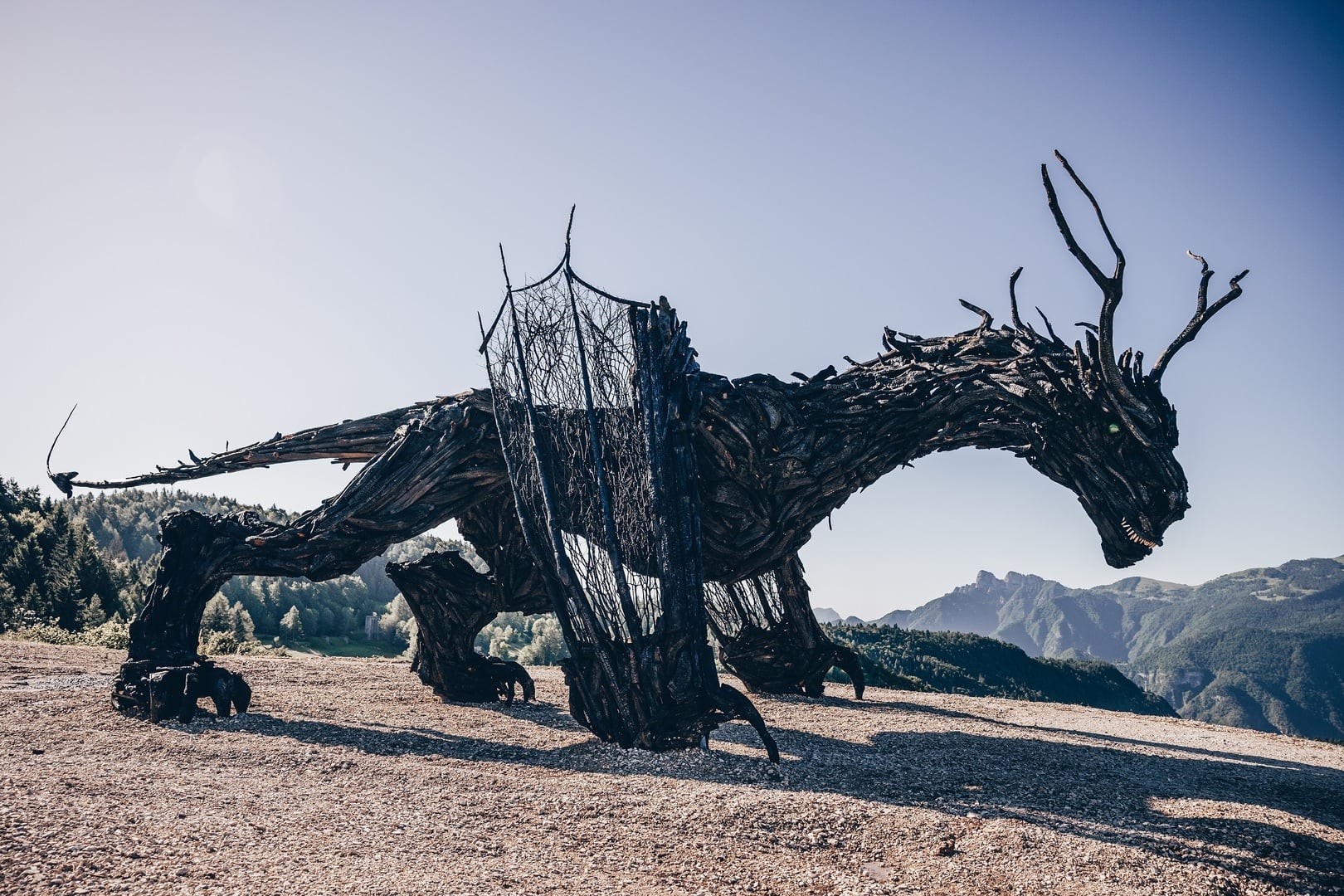
In October 2018 storm Vaia flattened millions of trees across north-eastern Italy. In 2021 the sculptor Marco Martalar took that timber — two thousand pieces, three thousand screws — and built a six-metre dragon out of it, at Magrè di Lavarone. Not a monument to the disaster: a living thing, made from what the disaster left behind. Within two years tens of thousands of people had walked up to see it.
On the night of 23 August 2023, somebody set fire to it. It burned to nothing, in an arson blaze visible for miles.
That could have been the end of it. It wasn't. Martalar built it again — and built it twice the size. The new dragon, unveiled on 1 July 2024, is sixteen metres long, seven metres tall and weighs six tonnes: the largest wooden dragon sculpture in the world. But the detail that stops people is a different one. It's made of charred wood, deliberately burned by the artist, and the remains of the burnt dragon are built into it. It's called Regeneration. Forged from ashes, quite literally.
You can only reach it on foot, and that's part of the point. Trails start from four car parks — from Cost it's about thirty minutes, from Gionghi forty-five to sixty, and from Bertoldi you can shorten it with the chairlift. Gentle gradients, woods the whole way.
It's a story that touches us directly: some of the timber salvaged after Vaia was reworked and used in this building too. Same disaster, same refusal to waste anything.
5. The Bee Trek
We'll finish with the sweetest surprise. The Alpe Cimbra's Bee Trek is a themed route dedicated to bees and pollinators, linking Folgaria, Lavarone and Luserna, with four Bee Gardens planted with native flowers.
The good news is that you don't have to walk the whole thing: one of the gardens sits right on the shore of Lake Lavarone, a few steps from here, along the Prombis path. Information boards, small quizzes, and the discovery of how much work goes into one jar of honey. It's the walk to do with children.
Go wild for a while. The good stuff, here, is within walking distance.
Times, distances and opening hours shift with the season: it's always worth checking the official Alpe Cimbra maps before you set off. We'll be down at the lake — and we're happy to put together a picnic basket for the road.