People come to Lavarone for the lake and almost always find a second thing they were not expecting: this plateau was front line in the First World War. The Austro-Hungarian fortresses are still here, half swallowed by the forest, and you can go inside.
There were seven of them, built between 1908 and 1914 along the border between the Austro-Hungarian Empire and the Kingdom of Italy. The Alpe Cimbra was the edge of two worlds, and these plateaus, which today look purpose-built for holidays, were the barrier.
Forte Belvedere Gschwent
This is the reason to make the trip: the best preserved fort on the entire alpine front. Not a ruin to look at from outside, but a structure you walk into. Down through the tunnels cut into the rock, through the barrack rooms, out to the gun positions, looking through the same slits at the same valley. The museum inside covers the daily life of the men who were here: not only the fighting, but the cold, the waiting, the letters home.
It works with teenagers too, because it is a place you move through rather than a glass case. Allow a couple of hours, and bring a jumper even in July: underground the temperature never changes.
The other six
The rest are in very different states, from moss-covered ruins to positions that still have their walkways. You reach them on the paths that cross the plateau, and that is the striking part: you walk through forest, round a bend, and there is a wall of reinforced concrete the height of a house that has nothing to do with the landscape.
The Peace Path
Many of these positions are linked by routes following the old lines. You can walk for hours past trenches, tunnels and artillery emplacements with the valley opening below. You do not need to be a military history enthusiast: it is simply one of the more honest ways to look at these mountains.
Getting there from the lake
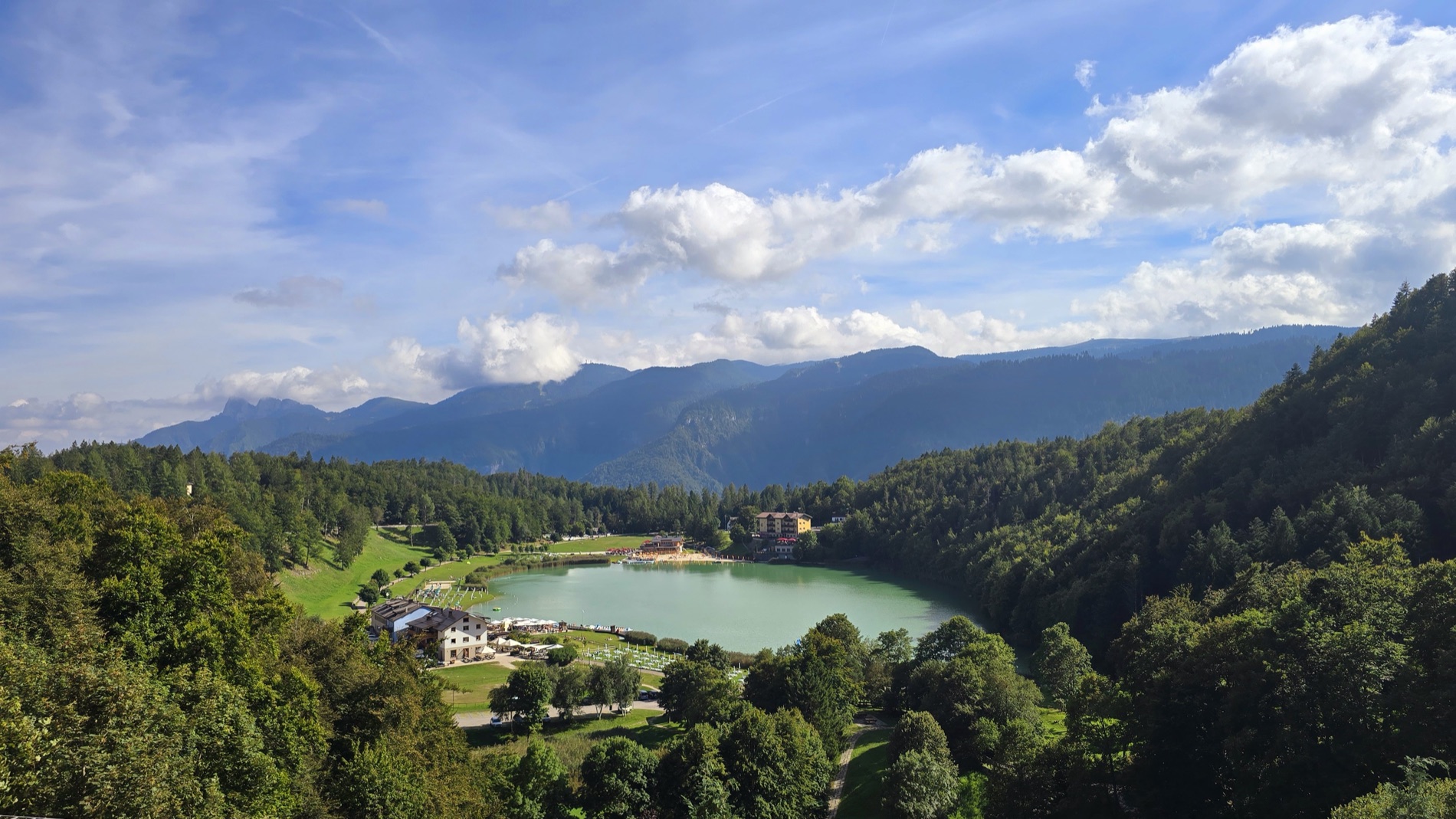
From Bazzario you go on foot. The forts are one of the five walks that start at the shore. If you would rather cycle, the loops are in what to do on the Alpe Cimbra by e-bike.
Staying here. Bazzario sits on the shore of Lake Lavarone: you wake up, open the window, and the lake is already there. Eight rooms, all different, none of them looking like a hotel room.
Frequently asked questions
How many Great War forts are there in Lavarone?
Seven Austro-Hungarian fortresses were built on the Lavarone plateau between 1908 and 1914. Forte Belvedere Gschwent is the best preserved on the entire alpine front and can be visited, with a museum inside.
Can you go inside Forte Belvedere?
Yes. Unlike most Great War forts, Forte Belvedere can be entered: you walk the tunnels cut into the rock, the barrack rooms and the observation posts. Allow about two hours and bring a jumper, because it is cold underground all year.
Are the Lavarone forts suitable for children?
Yes. Forte Belvedere is visited on foot through lit, walkable tunnels rather than by looking at display cases, which makes it work well for older children and teenagers.
What is the Peace Path?
It is the route linking the First World War positions along the old front. On the Alpe Cimbra it passes trenches, tunnels and artillery emplacements and can be walked starting from the area around Lake Lavarone.